What the customer noticed and the awkward question
The MacBook had been in for a previous repair some months earlier and had been running fine since. It had now stopped powering on entirely. The customer’s question, asked politely but directly: was this the previous repair failing?
That’s the right question to ask. It is also the question that requires an honest answer, not the convenient one. There are two possibilities:
- The previous repair has failed. Our warranty applies; we cover the rework at no further cost.
- A new, unrelated fault has appeared on a different part of the board. Our warranty doesn’t apply; the new work is a new job.
Older MacBooks develop new faults over time independently of any previous work. A board that’s been functioning fine can fail in a new way for reasons that have nothing to do with anything anyone did to it. Our job is to tell the customer truthfully which situation they’re in.
Sound like your problem?
Bring it to our Putney workshop or message us a photo and we will give you a straight answer and a quote before any work starts.
Our Diagnosis
The first task was to establish which area of the board had failed, and whether that area was related to our previous work.
- Visual inspection of the previous repair area. Looked at the components we’d worked on previously. All in good condition, no signs of stress, no broken joints, no thermal damage. Previous work confirmed still good visually.
- Power-on attempts under instrumentation. Connected the board to bench power through the charge port with current monitoring. No current draw on power button press — completely dead, not a partial boot.
- Thermal imaging during power-on attempts. Looked for unusual heat patterns during boot while attempting to power on. Briefly saw warmth in a specific area of the power-management circuit on the opposite side of the board from our previous work.
- Targeted electrical tests. Probed the suspect area. Found a short-to-ground on one of the early power rails — the rail that the SMC enables first when power-on is requested. That short was the immediate cause of the dead board.
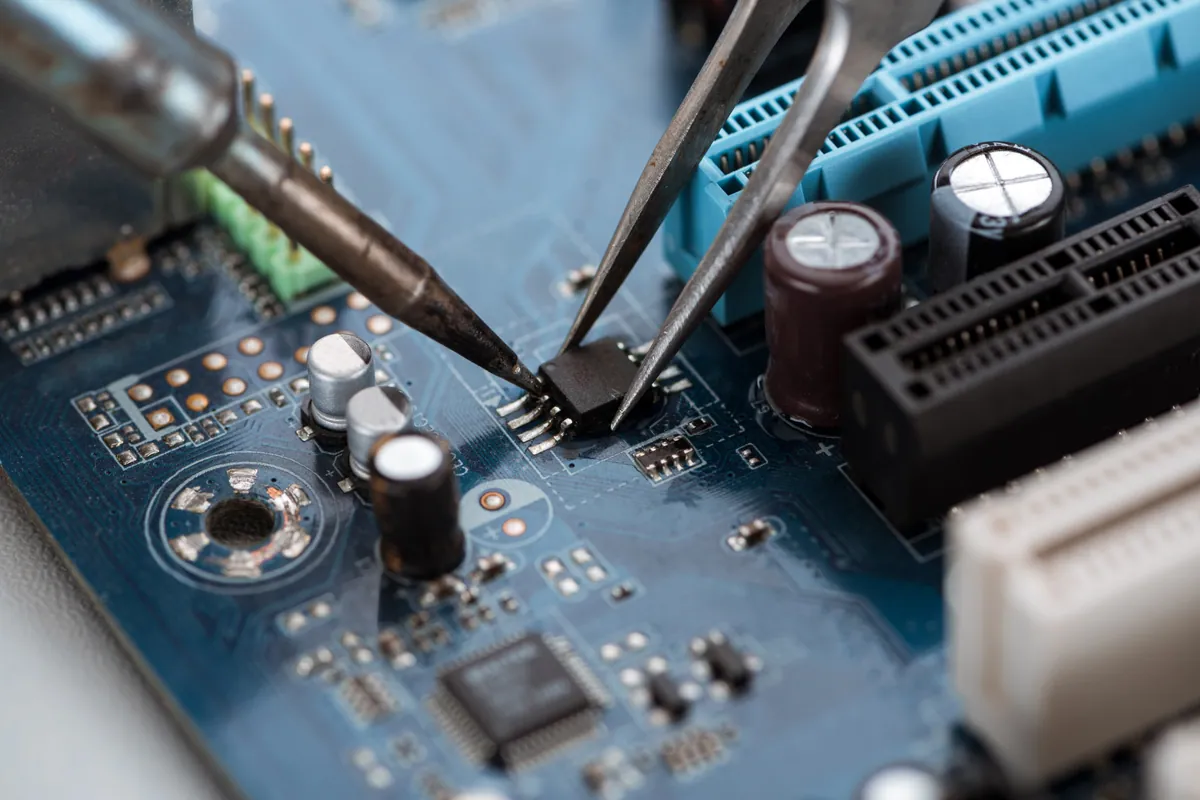
- Inspection under magnification. Found a small capacitor that had failed short. Visible discolouration on the body of the component; this is what failed capacitors of that type look like.
Conclusion: new fault in a completely different area of the board from the previous repair. Different failure mode (failed capacitor) than the previous repair (which had been around a different power-management component). Genuinely unrelated.
The honest conversation
We talked the customer through what we’d found:
- The previous repair area was still in good condition and not the cause of the new fault.
- The new fault was a failed capacitor in a different area of the board — a wear-related component failure that happens to MacBook logic boards of this age regardless of any repair history.
- Because the new fault was unrelated to our previous work, the previous repair’s warranty did not apply.
- We could quote for the new work as a new job — component-level refurbishment of the failed area, at the same kind of cost as a typical refurbishment.
The alternative — extending the previous warranty over an unrelated fault — would have been the easier conversation and the worse practice. Workshops that extend warranties indiscriminately end up either losing money on each job or building the loss into higher upfront prices. We charge honestly for the work each job needs.
The customer appreciated the directness and agreed to the new work.
How We Fixed It
Component-level refurbishment of the failed area:
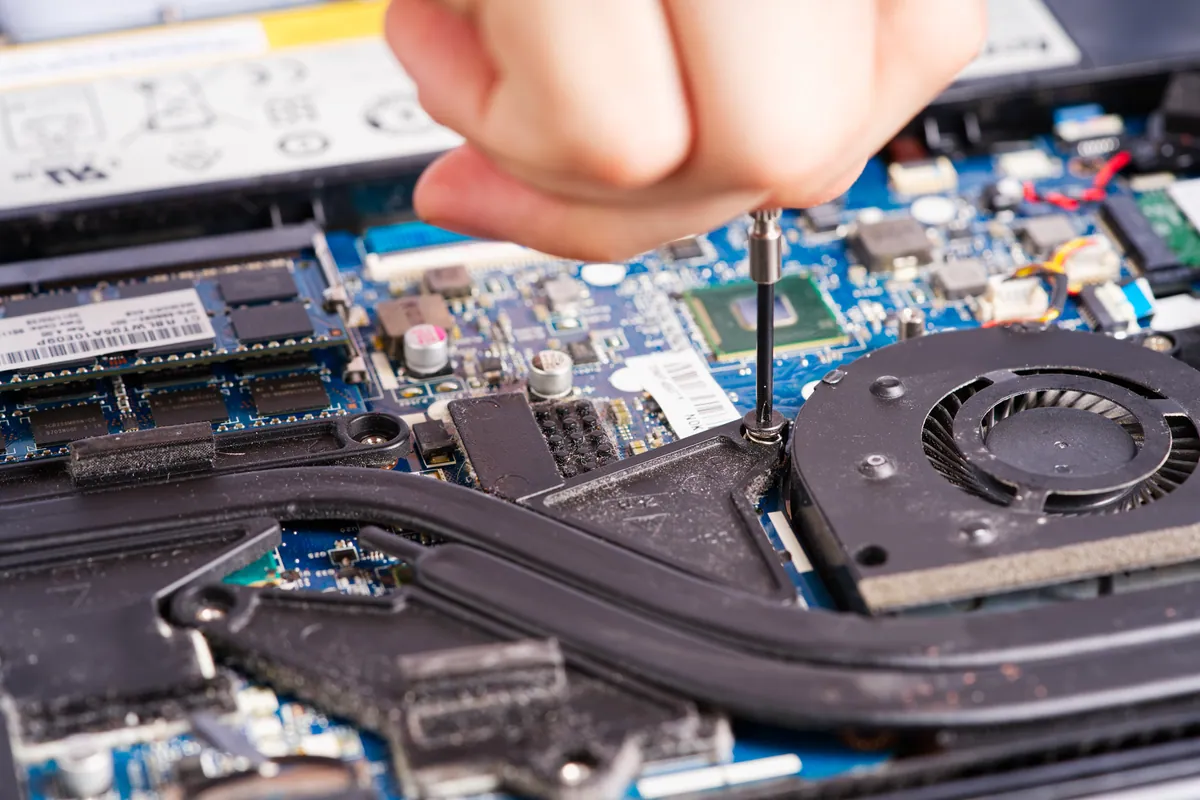
- Board out of the chassis, battery disconnected
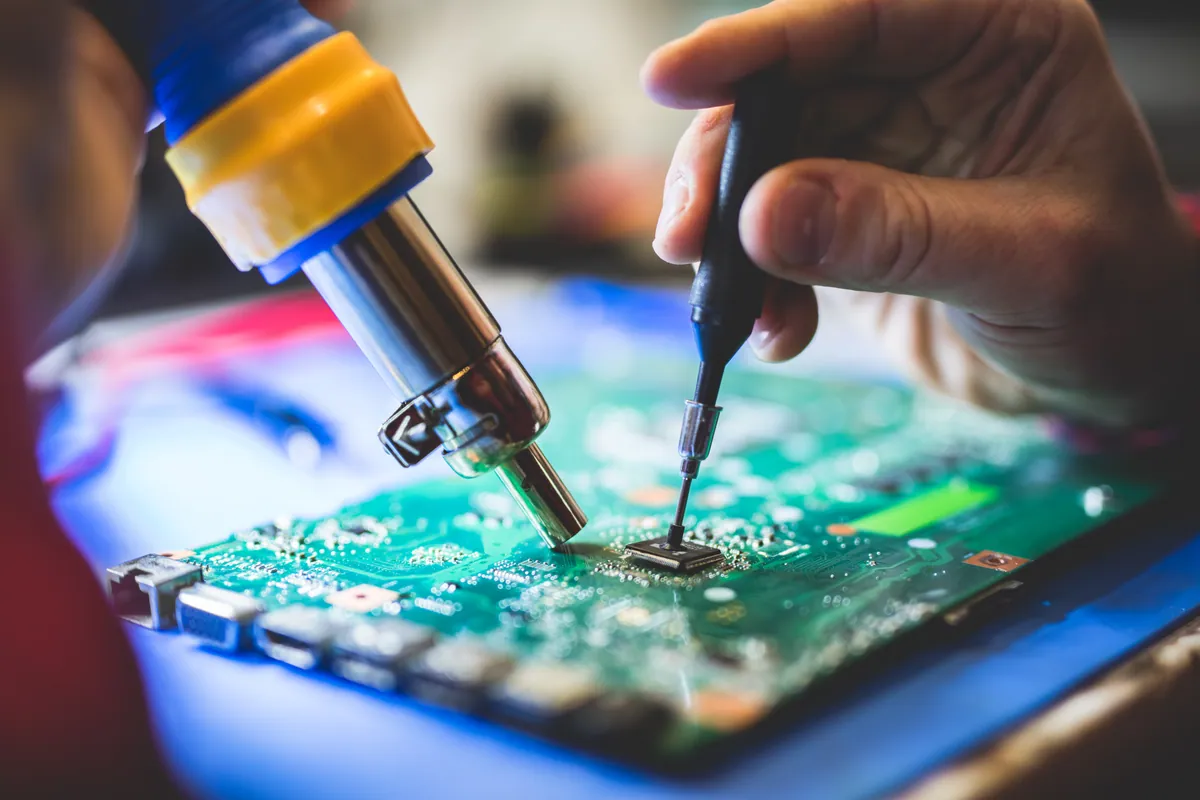
- Failed capacitor identified, removed cleanly with hot air
- Solder pads cleaned and prepared
- Replacement capacitor (matched value, voltage rating, temperature spec, physical size) fitted
- Surrounding components inspected for any related stress damage — none found
- Controlled re-power through bench supply with current monitoring. Clean. Stepped through to full power-on attempt. Successful first try.
- Extended verification over 24 hours of cold boots — every attempt successful.
Wider sanity check on the board:
While the board was out anyway, we inspected the other power-management areas and replaced two further capacitors that were beginning to show similar early-stage discolouration. Not yet failed, but at the start of the same wear pattern. Replacing them now meant the customer wouldn’t be back for the same diagnostic in a few months.
We mentioned this proactive work in the quote upfront — not done silently, not surprise-billed.
Reassembled into chassis, full function tests, overnight stability test under normal load.
The Result
MacBook back in service. Stable cold boot every attempt. Customer briefed honestly on what had failed, what was replaced, and what was inspected proactively. Warranty on the new work, separate from the (unrelated) previous one.
Why This Happens
The components on a logic board are wear items in ways that aren’t always obvious:
- Capacitors — both ceramic and electrolytic — drift in value over time. Some fail short (taking out a rail), some fail open (causing instability under load).
- Solder joints — particularly on the larger BGA components — fatigue from repeated thermal cycling. A board that has been through thousands of warm-up / cool-down cycles develops marginal joints that eventually fail.
- Inductors and small ICs in the power-management circuitry have rated operating lifetimes that get used up faster on machines run hot for long periods.
- General age. Electronics that worked perfectly for years can begin failing within months of each other as a generation of components reaches its statistical lifetime.
For MacBooks aged 5+ years, expect periodic new faults independent of any previous repair work. Component-level refurbishment is usually still economic at that age — full board replacement very often isn’t.
Why we charge for new faults rather than extending warranties
Our warranty covers the specific area of work we did. If that area fails, we fix it at no further cost. If a different area fails, that’s a new job with its own warranty.
Why this matters:
- It keeps prices honest. Workshops that “cover everything that might fail” build that risk into upfront prices. Customers paying for one repair end up subsidising every other customer’s unrelated failures.
- It keeps diagnosis honest. We diagnose new faults properly rather than reflexively blaming the previous repair (or, conversely, blaming the customer for a fault that is actually our fault).
- It builds trust. Customers come back to workshops that tell them the truth. The customer in this case has since brought in two other machines for unrelated work.
Local Help in Putney SW15
If you’ve been quoted for a ’new logic board’, it’s worth a workshop second opinion.
Component-level refurbishment is materially cheaper than full board replacement when the underlying fault is localised — which it often is.
Book a workshop visit on 020 7610 0500 or via the contact page.