What Was Happening
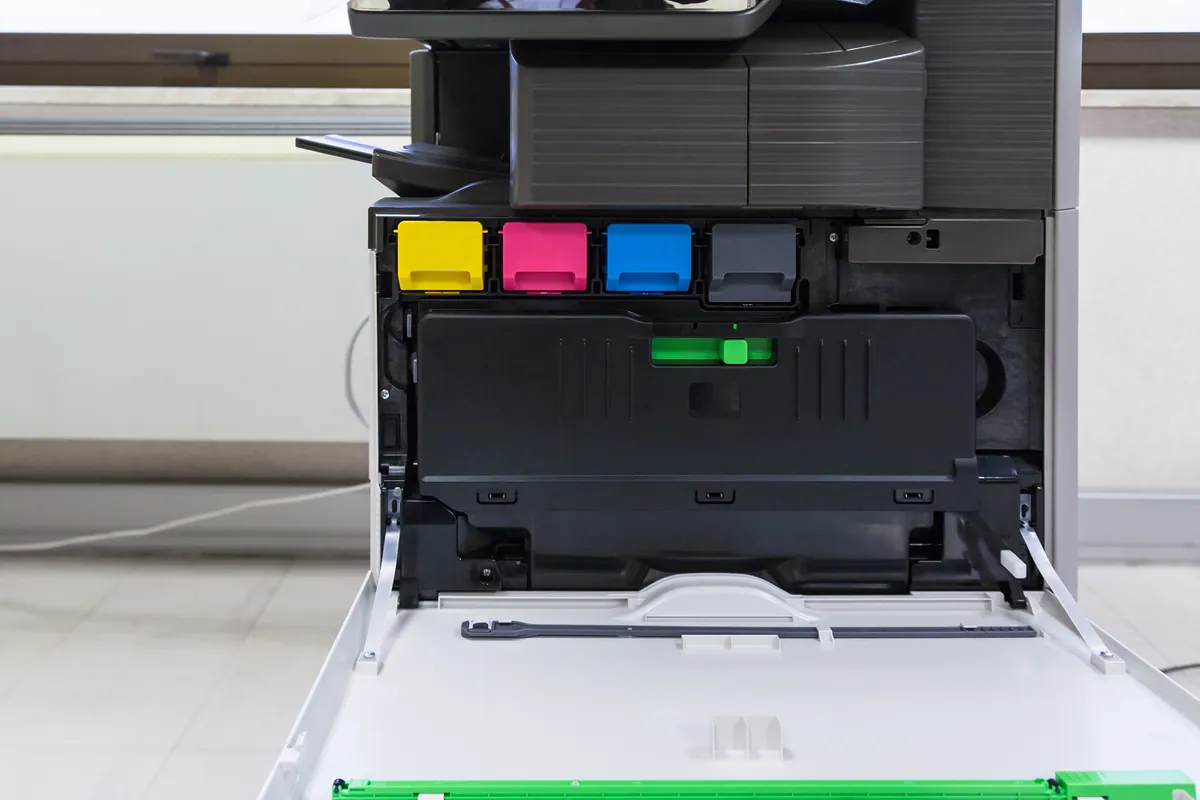
An office in Wandsworth SW18 had taken delivery of three new Brother multifunction printers. The units were in place and powered, positioned where they were wanted around the office. That was as far as it had got.
They needed connecting to the Wi-Fi and adding to the computers, which was how the request reached us. It sounds like a small job, and for one printer and one laptop it would be. Across three devices and a full office of machines it isn’t — and the scanning side, which is what an office of this kind actually depends on day to day, is where most of the work sits.
Nothing here was broken. This was a configuration job from start to finish, which is worth saying plainly because it’s a category of work people often assume they should be able to finish themselves and then lose most of a day to.
Sound like your problem?
Bring it to our Putney workshop or message us a photo and we will give you a straight answer and a quote before any work starts.
Our Diagnosis
The first decision on any office printer install is how the printers get their network addresses, and it’s the decision that determines whether the setup still works in three months.
By default a printer joins the network and is handed an address automatically, which can change when it reconnects or when the router restarts. The printer still works, but every computer that was set up pointing at the old address quietly stops finding it. This is the single most common reason an office printer “randomly stops working” — nothing has failed, the computers are simply looking in the wrong place.
For a home with one printer that’s a minor annoyance. Across three printers and a full set of office machines, it means the whole install unravels at the first power cut. So the printers needed addresses that would stay put.
The second consideration was scanning, and this is where the real work was. For an office, a multifunction printer that only prints is doing half its job. Scanning to email and to a shared folder is what turns paperwork into something usable. Both routes need configuration that goes well beyond joining the Wi-Fi:
- Scan-to-email means the printer has to send mail itself, authenticating against a mail service as though it were a user.
- Scan-to-folder means the printer has to write to a location on the network, with permissions allowing it to do so.
Neither is difficult, but both are unforgiving of small mistakes, and both fail in ways that are hard to interpret if you aren’t expecting them.
How We Fixed It
We worked through it printer by printer rather than trying to do all three in parallel, because a repeatable process across identical devices is faster and less error-prone than jumping between them.
Network. Each printer was joined to the office Wi-Fi and given a stable address so it would stay reachable at the same place after any reconnection or restart. That one step is what makes the difference between an install that holds and one that has to be redone.
Computers. Each printer was then installed on the office machines with the correct drivers and pointed at its fixed address, and we set sensible defaults so people weren’t fighting the settings on every job.
Scan-to-email. We configured each printer to send scanned documents by email, which meant setting up the outgoing mail details and authentication correctly. This is the step that most often defeats a self-install, because mail providers have steadily tightened what they accept — a printer generally can’t just be given someone’s normal email password any more, and needs its own credential arrangement.
Scan-to-folder. We set up shared-folder destinations so documents could be scanned straight to where the office actually keeps them, with the permissions required for the printer to write there.
Then we tested every combination that mattered: printing from each machine to each printer, and scanning by both routes with the results checked at the destination rather than just at the printer’s screen. A scan job that reports success at the panel and never arrives is the classic failure here, and the only way to catch it is to go and look.
The Result
The office finished the visit with three printers working properly from every computer, and scanning that reliably delivered documents to email and to the shared folders.
Because the printers were given fixed addresses rather than left to pick up whatever they were handed, the setup is stable — a power cut or a router restart won’t quietly disconnect them from everyone’s machines a fortnight later.
It was a single onsite visit. Doing it in one pass, in the office, with all three devices and all the computers present, is considerably quicker than trying to solve it remotely one machine at a time.
Why This Happens
Office printers occupy an awkward middle ground. They’re sold as consumer-simple devices, and for a single user on a single laptop they genuinely are. Put three of them into a shared office with several computers and a scanning workflow, and they behave much more like network equipment — which is a different job requiring different decisions.
The addressing issue is the clearest example. Automatic addressing is exactly right for a phone or a laptop, which don’t care what address they get. It’s wrong for a printer, because other devices need to find it at a known location. Most consumer setup guides never mention this, so the problem doesn’t appear until weeks later when the printer has reconnected on a different address and everyone’s machine reports it offline.
Scan-to-email has become markedly harder over the last few years, and it catches out a lot of people. Printers send mail through the same protocols any mail client uses, but mail providers have moved firmly away from accepting a simple username and password from an arbitrary device — for good security reasons. Modern practice is a dedicated credential for the device, or routing through a mail relay that permits it. A printer that worked fine for years can suddenly stop emailing scans without anything changing at the office end, because the provider changed its rules.
Scan-to-folder has a subtler trap: the destination has to be somewhere that lasts. Pointing a printer at a folder on one person’s computer works beautifully until that machine is asleep, replaced, or the person leaves. A location that exists independently of any one machine is worth the extra few minutes at setup.
For any office setting up shared printers, the questions worth asking are simple ones: will the printer still be at the same address next month, can it still send email if the mail provider tightens its rules, and does the scan destination survive one computer being switched off? Getting those three right at the start is what separates an install that lasts from one that needs revisiting.
Local Help in Wandsworth SW18
If you’ve got printers sitting in an office doing nothing, or scanning that used to work and has quietly stopped, it’s usually a configuration matter rather than a fault — and it’s normally sorted in a single visit.
Wandsworth is a few minutes from our Putney workshop, so an onsite visit is straightforward. Call 020 7610 0500 or arrange printer setup in Wandsworth — tell us how many printers and roughly how many computers need them, and we can give you a realistic idea of time before we come out.