Position Beats Quantity
A 4K camera pointed at the wrong thing is worse than a modest one aimed properly. The most common problem we see with home CCTV isn’t cheap hardware — it’s placement that captures the top of someone’s head, a wall of glare, or a lovely wide view of the garden with the actual gate just out of frame. Getting the position right is what turns footage into something the police can use.
Below are the principles that decide whether a camera earns its place.
Sound like your problem?
Bring it to our Putney workshop or message us a photo and we will give you a straight answer and a quote before any work starts.
Get the Height and Angle Right
Height is the single biggest factor in whether you capture a usable face.
- Aim for around 2.5 metres. High enough to be out of easy reach, low enough that the lens still catches faces rather than the crowns of heads. Mount a camera up under the eaves at 4 metres and everyone walking towards it becomes an anonymous shape.
- Tilt down gently, not steeply. A shallow downward angle keeps faces and number plates in the frame. A steep top-down angle is good for spotting that something happened, but poor for identifying who.
- Point across a path, not straight down it. A camera facing along a walkway gives you several seconds of an approaching face. One staring at a doorway only sees the back of someone’s head as they leave.
Cover Entrances, Then Kill the Blind Spots
Prioritise the ways in — front door, back door, side gates — because that is where incidents begin. But once the obvious entrances are covered, walk the property and look for the routes someone could take unseen: the dark side return, the gap behind the garage, the fence line the streetlight never reaches.
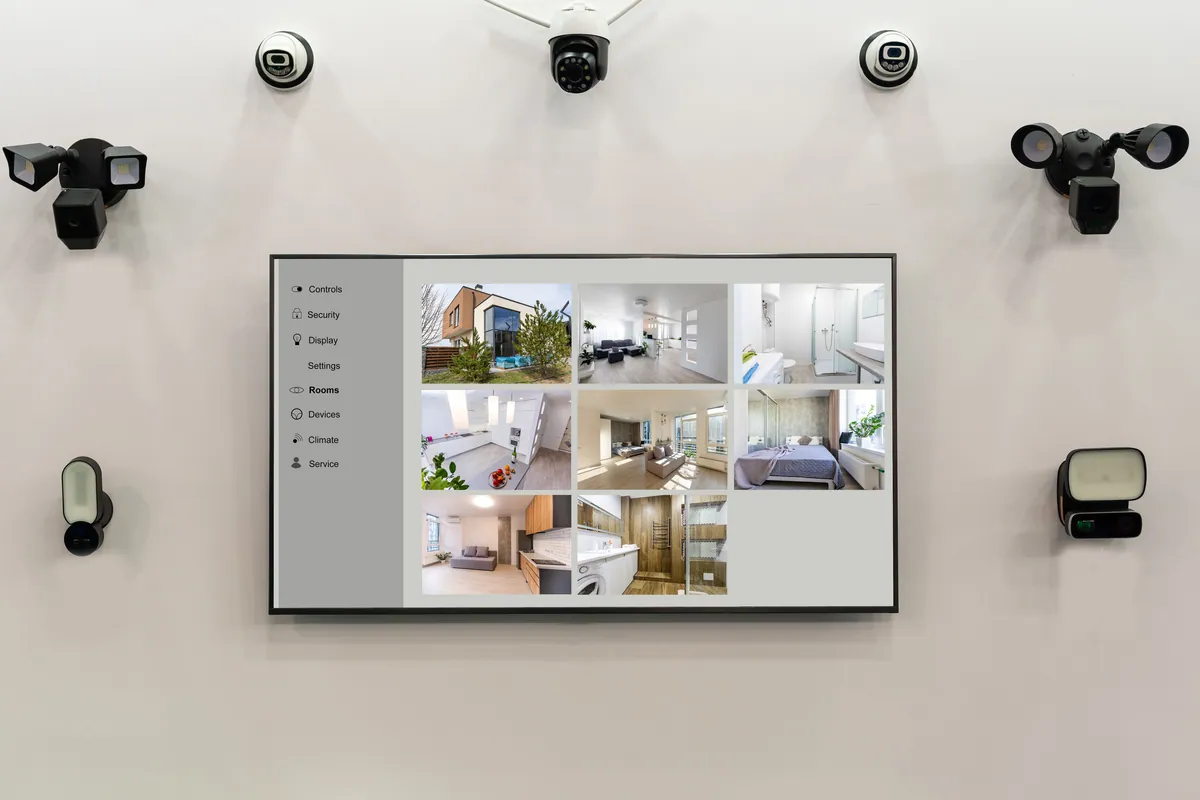
The trap is that every camera creates its own blind spot directly beneath and behind it. Two cameras covering each other’s blind spots — a technique sometimes called overlapping fields of view — is far stronger than two cameras pointed at the same busy doorway. When you plan positions, sketch the property from above and shade what each lens actually sees. The gaps between the shaded areas are exactly where a problem will happen.
Watch Out for Light
Cameras struggle with the same things our eyes do, and lighting mistakes ruin more footage than any other single factor.
- Avoid pointing at the sun or a bright sky. A camera facing east or west can be blinded at sunrise and sunset, and one aimed at a bright background turns the subject into a silhouette. Face north where you can, or angle down so the sky is out of the frame.
- Mind your own security lights. A bright bulb directly in shot causes flare and forces the camera to darken everything else. Position the light and the camera so the beam falls on the scene, not into the lens.
- Check night vision reach. Infra-red only lights up so far — usually a few metres — and reflects harshly off nearby walls, glass and white surfaces, washing the image out. Test the night view before you commit to a mounting point.
Weatherproofing and Cable Runs
Outdoor cameras need mounting where rain runs off, not into the housing, and where a spider building a web across the lens won’t trigger every motion alert. Under an eave or soffit is ideal — sheltered, high, and with a tidy route for the cable back indoors.
For a multi-camera setup, plan the wiring before you drill. Wired cameras to a recorder are the most dependable choice; if you’re going wireless, remember each camera leans on your home WiFi, and a back-garden or gate position is often right at the edge of coverage. A solid home network makes wireless cameras far more reliable, and it’s worth reading the guides in our Support Centre if your signal already struggles at the edges of the property.
Stay Within the Rules
Home CCTV that captures beyond your boundary — the pavement, the road, a neighbour’s garden — brings data-protection duties under UK GDPR, and the ICO expects you to keep that coverage to a minimum. Placement is the easy fix: aim cameras at your own doors, drive and garden, and use the privacy-masking feature most recorders offer to grey out a neighbour’s window or a stretch of street. Good positioning keeps you on the right side of the rules and keeps things neighbourly.
Getting It Right the First Time
Repositioning a camera after the cables are chased into the wall is a pain, so it pays to plan the angles before anything is mounted. If you’d rather have the positions, heights and recorder sized correctly from the start — or you’re integrating cameras into a wider setup as part of a smart home installation — that’s exactly what our CCTV installation service does.
We survey the property in and around Putney and across South West London, and you can call 020 7610 0500, drop into the Putney workshop, or use the contact form to arrange a visit.