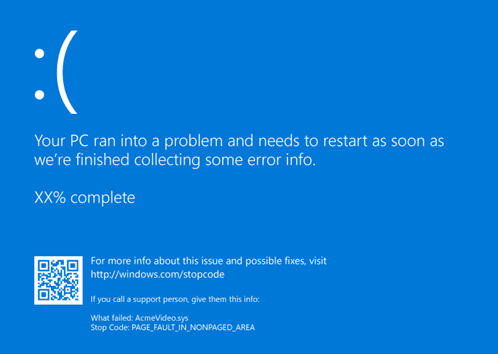
Blue Screen of Death and SSD Failure
Frequent Blue Screen crashes are often blamed on Windows updates or drivers, but storage failure is a common hidden cause. If your SSD is degrading, system files can become unreadable and Windows may crash before startup completes.
Typical warning signs
- BSOD appears repeatedly during boot
- Startup repair cannot complete
- System freezes while loading Windows
- Files go missing or become unreadable
- Drive health utilities show SMART warnings
What to Check First
Before replacing hardware, run a structured diagnosis:
- Enter BIOS/UEFI and confirm the drive is detected consistently.
- Run a storage health test from a bootable diagnostic tool.
- Check Windows error logs for disk-related failures.
- Attempt recovery from a known-good USB installer.
If the drive disconnects intermittently or reports poor health, continuing to use it can increase data-loss risk.
Practical Repair Path
For systems with confirmed SSD corruption, the reliable route is:
- Replace the failing SSD
- Reconfigure BIOS boot order
- Install Windows cleanly
- Apply drivers and updates
- Verify system stability under test load
Where data is still accessible, recover important files before full reinstall.
When to Get Professional Help
If your machine is trapped in crash loops or you are unsure whether the issue is SSD, RAM, or motherboard related, a professional diagnosis avoids unnecessary part swaps.
At PC Macgicians, we provide targeted PC Repair and SSD Upgrade services with clear recommendations and realistic turnaround times.
Need help with a BSOD issue now? Contact us and we will assess the fastest recovery route for your system.